


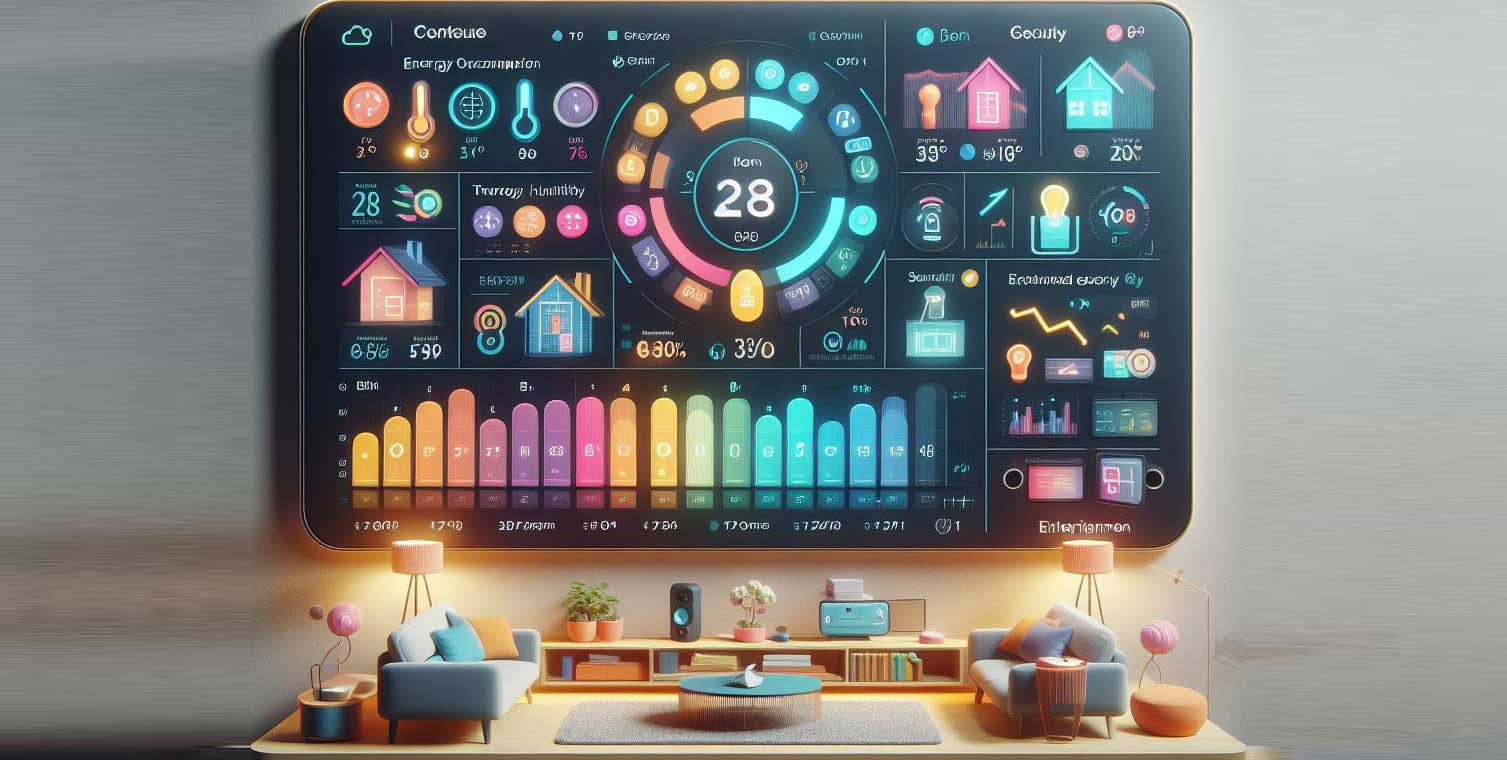

A smart home is a home that uses technology to make your life easier, safer, and more enjoyable. A smart home can automate and control various aspects of your home, such as lighting, temperature, security, entertainment, and more. You can use your smartphone, tablet, laptop, or voice assistant to remotely access and manage your smart home devices and systems.
There are many benefits of having a smart home, such as:
- – Convenience: You can save time and effort by letting your smart home do the work for you. For example, you can set schedules and routines for your smart home devices to turn on and off automatically, or you can use voice commands to control them hands-free.
- – Comfort: You can create the perfect ambiance and atmosphere for your home by adjusting the lighting, temperature, and music to suit your mood and preferences. You can also enjoy the convenience and entertainment of smart speakers, streaming devices, and voice assistants.
- – Security: You can protect your home and family by monitoring and managing your security cameras, locks, alarms, and sensors from anywhere. You can also receive alerts and notifications if anything unusual happens, such as a break-in, a fire, or a leak.
- – Efficiency: You can save money and energy by optimizing your appliances, thermostats, water heaters, and other devices to run more efficiently and reduce waste. You can also track and analyze your energy usage and consumption to make smarter decisions.
How to Get Started with Your Smart Home
If you are interested in making your home smarter, you will need a few things to get started, such as:
- – A reliable internet connection and a compatible device, such as a smartphone, tablet, or laptop.
- – A smart home hub or a voice assistant, such as Amazon Alexa, Google Assistant, or Apple HomeKit. A smart home hub or a voice assistant acts as the brain of your smart home and allows you to connect and communicate with your smart home devices and systems.
- – Smart home devices and systems, such as smart lights, smart plugs, smart thermostats, smart cameras, smart locks, smart speakers, and more. You can choose from a wide range of smart home products and services, depending on your needs and budget. You can also customize and expand your smart home system as you go.
There are many ways to set up and install your smart home devices and systems, such as:
- – DIY: You can buy and install your smart home devices and systems yourself, following the instructions and guides provided by the manufacturers or online resources. This option is usually cheaper and more flexible, but it may require some technical skills and knowledge.
- – Professional: You can hire a professional installer or a smart home service provider to install and configure your smart home devices and systems for you. This option is usually more expensive and less flexible, but it may offer more convenience and reliability.
The Future of Smart Homes
Smart homes are becoming more popular and accessible, thanks to the advancement of technology and the availability of affordable and user-friendly products and services. According to a report by Statista, the global smart home market is expected to reach $141 billion by 2023, with more than 1.6 billion smart home devices in use.
As smart homes evolve and improve, we can expect to see more features and functionalities, such as:
- – Artificial intelligence and machine learning: Smart home devices and systems will become more intelligent and adaptive, learning from your behavior and preferences and making suggestions and recommendations accordingly.
- – Internet of things and 5G: Smart home devices and systems will become more connected and integrated, communicating and collaborating with each other and with other devices and services, such as cars, wearables, and health care.
- – Voice and gesture control: Smart home devices and systems will become more responsive and interactive, allowing you to control them with your voice, gestures, or facial expressions.
- – Augmented and virtual reality: Smart home devices and systems will become more immersive and engaging, enhancing your experience and enjoyment with augmented and virtual reality.
Conclusion
- A smart home is a home that uses technology to make your life easier, safer, and more enjoyable. A smart home can automate and control various aspects of your home, such as lighting, temperature, security, entertainment, and more. You can use your smartphone, tablet, laptop, or voice assistant to remotely access and manage your smart home devices and systems.
- There are many benefits of having a smart home, such as convenience, comfort, security, and efficiency. To get started with your smart home, you will need a reliable internet connection and a compatible device, a smart home hub or a voice assistant, and smart home devices and systems. You can choose from a wide range of smart home products and services, depending on your needs and budget. You can also customize and expand your smart home system as you go.
- Smart homes are becoming more popular and accessible, thanks to the advancement of technology and the availability of affordable and user-friendly products and services. As smart homes evolve and improve, we can expect to see more features and functionalities, such as artificial intelligence, internet of things, voice and gesture control, and augmented and virtual reality.
- A smart home is not just a luxury, but a necessity for the modern lifestyle. If you want to make your home smarter and enjoy the benefits of a more convenient, comfortable, and connected lifestyle, contact us now and get a free consultation and quote. We are the experts in smart home solutions and we are ready to help you transform your home into a smart home.